

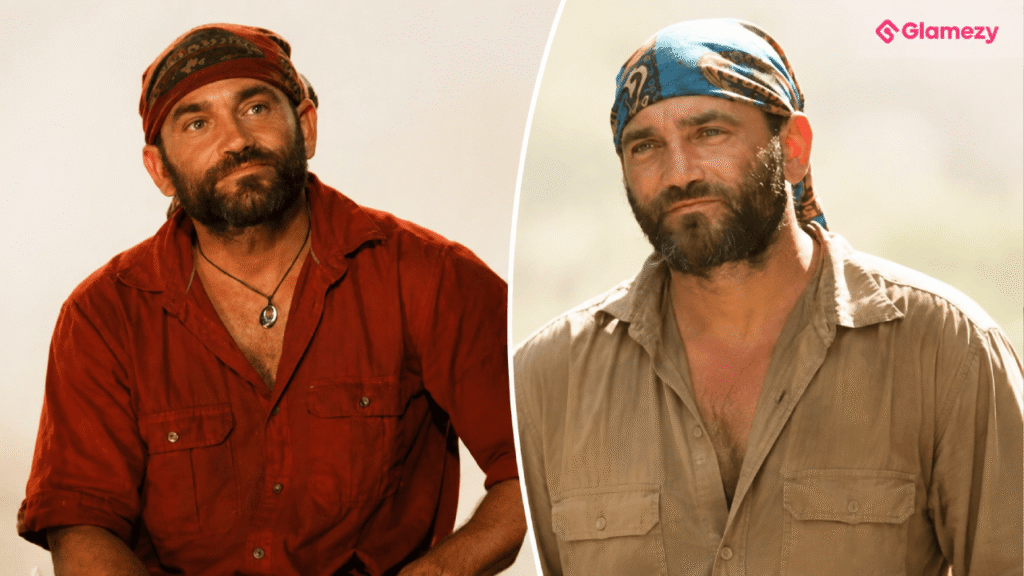
Russell Hantz is an American reality television personality whose aggressive tactics transformed Survivor, even though he never won the programme. He reached the final in both Survivor: Samoa and Heroes vs. Villains, but his inability to earn the respect of the people he eliminated cost him the title. His absence from the landmark 50th season has revived an old argument: was Hantz unfairly denied victory, or did he fundamentally misunderstand how Survivor is won?
Why Russell Hantz is still relevant to Survivor
Hantz has not competed on the American version of Survivor since Redemption Island in 2011. Yet his name returned to the conversation around Survivor 50, which brought together 24 returning players for the show’s anniversary season.
He was not included in the cast, although several returning contestants identified him as one of the most conspicuous absences. In The Hollywood Reporter’s discussion of the missing legends, former players placed Hantz alongside figures such as Jerri Manthey and Jonny Fairplay whose personalities helped define earlier eras of the programme.
As of 29 August 2026, no new appearance by Hantz on the American series has been officially announced. He continues to discuss Survivor online, but speculation about a possible legends season should not be treated as confirmation of his return.
His continued relevance comes from the fact that he changed how contestants approached hidden immunity idols, information and television itself. Hantz did not simply play against the people on his island. He consciously played for the cameras, understanding that an unforgettable character could build a career even without winning the million-dollar prize.
How Russell Hantz changed the game in Samoa
Hantz entered Survivor: Samoa in 2009 as a Texas oilfield businessman. From the beginning, he treated harmony within his Foa Foa tribe as a weakness to exploit.
He secretly emptied water from the tribe’s canteens and burnt another contestant’s socks. He also told a fabricated story about surviving Hurricane Katrina as a firefighter. The purpose was not merely to deceive one opponent; it was to create discomfort, dependence and confusion throughout the camp.
Those tactics established his villainous television identity, but his most important innovation was strategic. Hantz searched for hidden immunity idols without waiting for formal clues, effectively treating the location and production design as information.
Today, contestants routinely hunt for advantages as soon as they reach the beach. In 2009, searching so openly and successfully without a clue felt disruptive. Hantz recognised that an idol was not only protection from elimination. It could create fear, attract allies and force rival players to change their plans.
His original Foa Foa tribe entered the merged stage of the game badly outnumbered by Galu. Through idols, shifting alliances and targeted eliminations, Hantz helped reverse that disadvantage. He controlled many of the season’s decisive votes and won the final immunity challenge that removed Brett Clouser, the last remaining obstacle from the former Galu majority.
That résumé appeared overwhelming. Yet Natalie White defeated him at the final Tribal Council by a 7–2–0 jury vote, with Mick Trimming receiving no votes. The result remains one of the most debated decisions in the programme’s history.
Why did Russell Hantz lose to Natalie White?
Hantz’s supporters believed the most strategically active contestant should automatically receive the prize. The rules of Survivor, however, have never promised victory to the player who finds the most idols or directs the most eliminations.
The winner is selected by a jury made up largely of contestants the finalists helped remove. Managing those people is therefore not a secondary courtesy. It is part of the central game mechanism.
White understood this better than her quieter edit initially suggested. She recognised that openly challenging Hantz could make her a target, so she built personal relationships while allowing him to absorb attention and hostility. Her approach depended on his power, but it also anticipated its weakness.
Hantz reached the end with an impressive record of control but little goodwill. His final pitch focused on what he had done to the jury rather than why jurors should feel comfortable rewarding him for it. White could present herself as the person who survived beside him without humiliating people unnecessarily.
After the result, Hantz argued publicly that White did not deserve the title. He even offered to buy the designation of Sole Survivor from her during the live finale. White refused.
The contemporary CBS News coverage of Natalie White’s victory noted that Hantz had masterminded many eliminations and was widely expected to win. That expectation explains why the result felt shocking, but it does not make the jury vote invalid.
The game does not separate strategy from human consequence. Hantz was exceptionally skilled at reaching the final and remarkably poor at creating a jury willing to crown him.
Russell Hantz and the Heroes vs. Villains paradox
Hantz returned almost immediately for Survivor: Heroes vs. Villains in 2010. Because the two seasons were filmed back-to-back, the returning cast had not seen Samoa and did not fully understand his methods.
That timing gave him an advantage he could never have again. His reputation had not yet become public knowledge among the people playing against him.
On the Villains tribe, Hantz formed a crucial alliance with Parvati Shallow and Danielle DiLorenzo. His rivalry with “Boston Rob” Mariano became a central storyline, while a daring idol play helped eliminate Tyson Apostol and dismantle Rob’s alliance.
Hantz again demonstrated an ability to survive situations that appeared mathematically hopeless. He found idols, manipulated votes and reached the final three alongside Shallow and Sandra Diaz-Twine.
Yet the ending was even more decisive than in Samoa. Diaz-Twine won by six jury votes to Shallow’s three. Hantz received none.
The result revealed the paradox in his game. He believed that bringing disliked or apparently less powerful opponents to the end would maximise his chances. In practice, his aggressive treatment of jurors made almost anyone sitting beside him more appealing.
He also misread Diaz-Twine’s position. Her attempts to warn the former Heroes about Hantz strengthened her relationship with them, even when those efforts did not remove him. Hantz interpreted unsuccessful moves as proof that she had played badly. The jury interpreted them as evidence that she had understood the danger and treated them with greater honesty.
Twice, he controlled the route to the final. Twice, he failed to understand the people waiting there.
Was Russell Hantz robbed on Survivor?
The answer depends on what viewers believe Survivor ought to reward. If it were a contest decided by a judging panel measuring idols, blindsides and visible control, Hantz would have an exceptionally strong case for Samoa.
That is not the format he entered. The jury is not an accidental obstacle added after the strategic game; persuading it is the final strategic task.
His two defeats can be understood through a simple comparison:
- Tactical strength: He found idols, redirected votes and survived despite being targeted.
- Social weakness: He frequently underestimated quieter contestants and dismissed jurors’ emotional responses.
- Television strength: He gave producers conflict, confessionals and a clear season-long story.
- Endgame weakness: He treated reaching the final as proof that he deserved to win.
- Long-term strength: His methods influenced later contestants and made him one of the franchise’s defining figures.
- Repeatability problem: Once his reputation became known, opponents had little incentive to let him gain control.
Calling Hantz “robbed” also risks erasing the intentional work performed by White, Diaz-Twine and Shallow. Each recognised that surviving alongside a dominant player required its own form of strategy. Hantz’s edit was louder, but visibility and effectiveness are not identical.
Why his strategy stopped working
Hantz’s subsequent appearances demonstrated the cost of becoming a famous reality television villain.
On Survivor: Redemption Island in 2011, members of the Zapatera tribe considered him too dangerous to keep. They deliberately lost an immunity challenge to create an opportunity to eliminate him. Hantz was sent to Redemption Island and then lost the duel that ended his game.
He returned internationally for Australian Survivor: Champions vs. Contenders in 2018. Once again, he found a hidden immunity idol. He then displayed it openly to create uncertainty but did not play it when he needed it, becoming the second contestant eliminated from the season.
These early exits did not mean he had suddenly lost every strategic instinct. His problem was that his best weapon — appearing unpredictable while quietly gaining control — no longer existed. Everyone recognised the pattern.
A returning player can modify tactics, but reputation arrives before them. Hantz had become too valuable as an immediate target and too risky as a long-term ally.
What is Russell Hantz doing now?
After his first run on Survivor, Hantz and his brother Shawn appeared in the 2012 A&E property programme Flipped Off. The series followed their attempts to buy, renovate and sell houses in the Houston area but lasted only one season.
His public life has since shifted towards online commentary and personal content. In a 2025 update, People reported that he was creating travel and lifestyle videos for platforms including TikTok and YouTube. He has also continued discussing Survivor, offering opinions on new seasons and modern players.
Hantz has spoken about the personal costs associated with his reality television fame, including pressures on his business and family life. He has four children and has said that he increasingly values time and experiences with his children and grandchildren.
Reports that he sold much of his Survivor memorabilia appeared to symbolise that shift. It did not erase his connection to the programme, but it suggested a desire to prevent one television identity from defining everything that followed.
Russell Hantz won the argument, but not the game
Hantz never became Sole Survivor, yet his influence is visible whenever a contestant searches for an idol without a clue, uses an advantage as psychological leverage or treats confessionals as part of a wider media career.
He also gave the format one of its clearest lessons. Strategic control has no independent value if it cannot be converted into votes at the end. The jury is not required to overlook disrespect simply because the person responsible engineered impressive blindsides.
That is why the Russell Hantz debate survives long after his last American appearance. He was neither an incompetent player nor an obvious champion cheated by the rules. He was a revolutionary tactician whose greatest weakness sat at the centre of the game he was trying to master: other people decide whether he wins.
Frequently Asked Questions
Who is Russell Hantz?
Russell Hantz is an American reality television personality best known for competing on Survivor: Samoa, Heroes vs. Villains and Redemption Island.
Did Russell Hantz ever win Survivor?
No. He finished second on Samoa, third on Heroes vs. Villains and was eliminated early from his two later appearances.
Why did Russell Hantz lose Survivor: Samoa?
Natalie White defeated him because seven jurors chose to reward her social relationships and quieter strategy. Hantz received two votes despite controlling many eliminations.
How many times has Russell Hantz played Survivor?
He has competed four times: three times on the American series and once on Australian Survivor: Champions vs. Contenders in 2018.
Was Russell Hantz on Survivor 50?
No. He was not part of the official Survivor 50 cast, and no future return had been confirmed as of 29 August 2026.
What is Russell Hantz doing now?
Recent reporting describes him as an online content creator producing travel, lifestyle and Survivor-related videos while spending more time with his family.
If you like Read more on Jed York: What His Arrest Means for the 49ers.
