

Travel has always been very visual. People want to see the hotel before booking it, check the view before paying for the room, look around a destination, and sometimes even get a feel for an attraction before they arrive. That part hasn’t really changed. What has changed is how tourism companies are doing it.
Instead of relying only on photographs, maps and standard videos, more travel businesses are adding AR, virtual tours, projections, 3D visuals and other interactive tools. And in a lot of cases, these things are making the actual travel experience easier to understand and a bit more interesting.
- Virtual Reality Preview Tours
Booking something expensive without really knowing what it looks like can be frustrating. A few photos of a hotel room don’t always tell the whole story. The same goes for cruise cabins, resorts or holiday apartments.
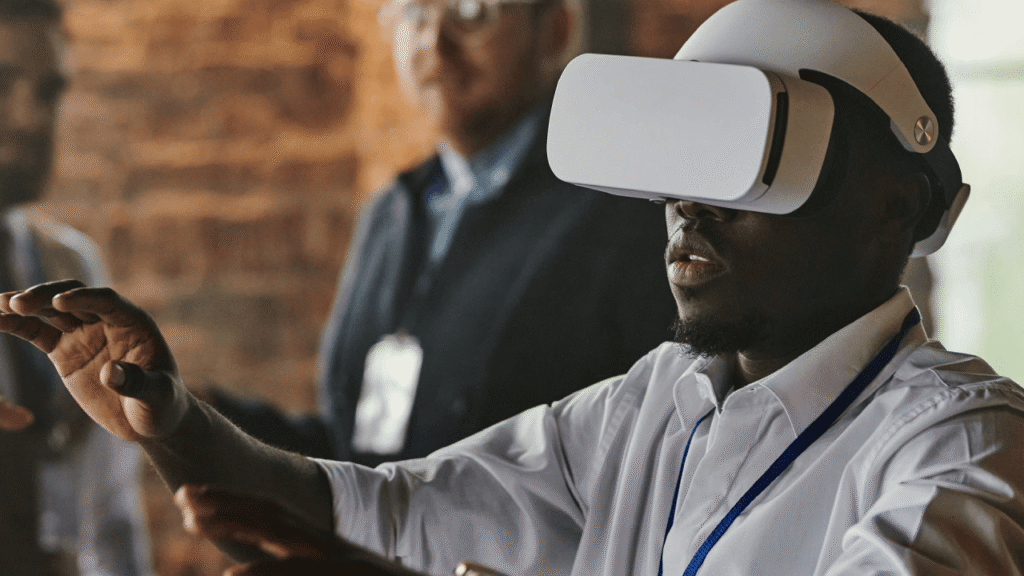
Virtual reality and 360-degree tours give travellers a better look before they make that decision. A person can move around a digital version of a room, check the balcony, look at the surroundings and get a better idea of what they’re actually paying for. This is especially useful for hotels and resorts where the experience is a big part of the purchase. It also cuts down some of that uncertainty. If someone has already seen the room virtually, there are fewer surprises when they arrive.
- AR City Navigation and Digital Guides
Getting around a new city can be confusing, particularly when there’s a lot happening around you. Augmented reality is being used to make this a little easier. Instead of constantly switching between a map and the street in front of them, travellers can use their phones to see directions, landmarks and other information over the real environment.
There’s another useful side to this. History. Imagine pointing a phone at an old building and seeing information about what stood their years ago. Or walking through a street and getting information about an important location without having to stop and search for it. Google’s ARCore technology already supports location-based AR experiences, including tools that allow digital content to be connected to real-world places. For tourism companies, that opens up quite a few possibilities without needing to fill every location with signs and information boards.
- Making Historical Places Feel Less Static
Historical attractions can be difficult to explain. A visitor might be standing in front of a ruined building, looking at a few remaining walls and trying to imagine what the place actually looked like hundreds of years ago. Digital visuals can help with that.
AR can add 3D buildings, objects or other information to a visitor’s view. Projection can take a slightly different approach by displaying historical photographs, documents and visuals directly within the environment. That can work particularly well for walking tours.
Instead of seeing historical material only inside a museum, visitors can encounter it while standing in the streets where the events actually took place. A good example is the Jack the Ripper tour Ripper Vision, which uses projected historical visuals during a walking experience. It’s a fairly simple idea, but it changes how the information is consumed. The surroundings become part of the presentation instead of just being somewhere people walk through.
- Giving Printed Travel Marketing a Digital Side
Printed brochures might sound a little old-fashioned now, but they haven’t completely disappeared. Travel companies still use brochures, magazines, posters and printed guides. The difference is that these materials can now connect directly to digital content.
A QR code can open a hotel video. A printed destination guide can lead to an interactive map. A travel advertisement can take someone straight to a virtual tour. It means a printed page doesn’t necessarily have to stop at being a printed page. There’s also a useful marketing benefit here. Once someone scans or interacts with the content, the company has a better idea of whether that material actually caught their attention. That’s much more useful than simply knowing how many brochures were handed out.
- AR Filters and Digital Travel Souvenirs
Social media has changed what people expect from travel experiences too. Visitors don’t just take a few photographs and keep them on their phones anymore. They share places, food, activities and experiences almost immediately. Tourism boards and travel companies have started using AR filters and camera effects to make that sharing more interactive. A destination could have its own filter. A historical site could add a digital character to the camera. Visitors might be able to see traditional clothing, landmarks or other visual elements through their phones. It can be fun, but there’s a marketing reason behind it as well. When visitors share these experiences, the destination gets additional exposure without having to create every piece of content itself. UN Tourism has also identified emerging technologies and digital transformation as important areas for the future of tourism.
The Technology Still Needs a Reason
There’s a temptation for tourism companies to add technology simply because it looks impressive. That usually isn’t enough. A complicated AR feature that nobody understands isn’t particularly useful. Neither is a VR tour that takes longer to navigate than simply looking at photographs. The technology needs to make something better.
Maybe it helps someone decide where to stay. Maybe it makes navigation easier. Maybe it explains a historical site that would otherwise be difficult to understand. Or maybe it simply makes an ordinary sightseeing experience more memorable. That’s where visual and augmented technology seems to have the most value.
Tourism is still about physical places. People still want to walk through streets, see buildings, visit beaches and stand in front of things they’ve only seen online. Technology doesn’t replace that. It adds another layer to it. And as these tools become easier and cheaper for tourism companies to use, more destinations are likely to find practical ways of mixing the digital world with the places people have travelled to see in the first place.
