

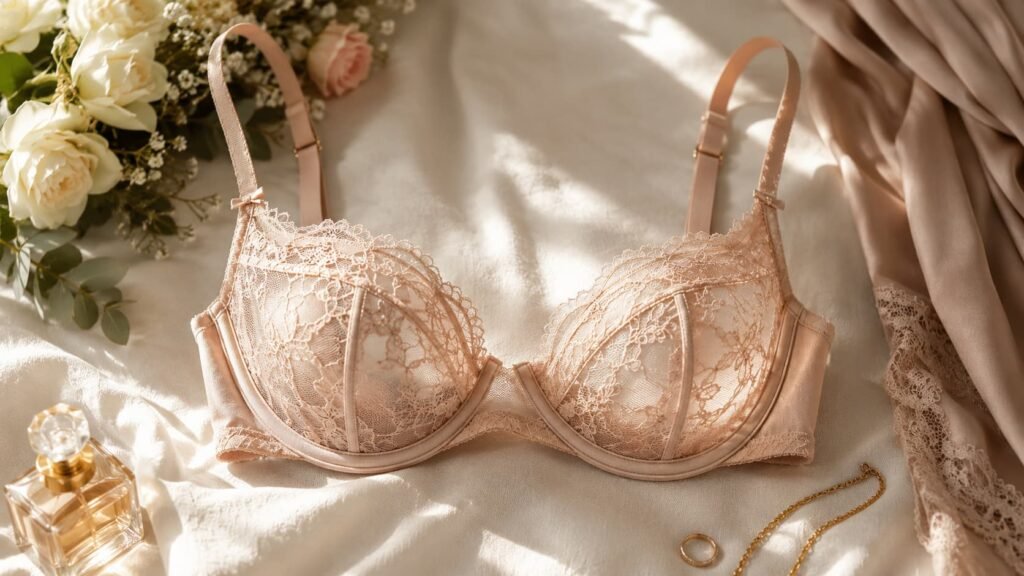
The balcony bra doesn’t get the same marketing fanfare as the plunge or the longline, but it’s the style that tends to do the most work for the widest range of body types, which probably explains why it keeps selling year after year regardless of what’s trending.
The cup shape and the strap placement is what separates the balcony bra from the rest; the cups are typically lower and wider across the top, creating a horizontal neckline that lifts and supports without pushing everything inward the way a plunge does. The straps sit further apart on the shoulders too, which changes the whole silhouette under clothing. It’s a subtle difference from the outside, but on the body, it’s significant.
Why the Shape Works Across So Many Sizes
One thing that doesn’t get said enough about balcony bras is how genuinely well they perform across a broader cup range than a lot of styles. Plunge bras can struggle to contain larger cups without the wires digging in or the centre panel gaping. Full cup styles cover everything but can create that awful double-bump effect under fitted tops. The balcony sits somewhere sensible in the middle, offering real structure without flattening or over-projecting.
Women with fuller busts often find the wide-set straps make a real difference too. When straps are positioned closer to the neck, as they are on a lot of T-shirt bras, the weight distribution can pull forward and create neck and shoulder tension over a long day, but wider placement makes a big difference.
For smaller cup sizes, the balcony shape creates definition that fuller coverage styles sometimes work against. It’s not about padding or push-up effects; the cut itself enhances shape naturally, which is why it tends to be the style that women come back to after trying everything else.
What to Actually Wear It With
The balcony works best under lower-cut or wide necklines, scoop necks, and anything off-the-shoulder. It doesn’t suit very high necklines because the top edge of the cup can show, which isn’t always a disaster but isn’t ideal. Square-neck tops in particular are having a moment right now, and the balcony neckline sits almost perfectly underneath them.
Fitted dresses are where this style really earns its keep. Because the uplift is central rather than inward, you get a rounded shape that reads well under jersey fabric without the strange pointy projection that can happen with push-up styles. It’s less about tricks and more about the bra doing what a bra is supposed to do, which sounds obvious until you’ve spent years wearing the wrong shape for your body.
A good balcony bra with proper underwiring and a well-fitted back band will also outlast a lot of softer styles. The structure means less distortion over time, and if you’re rotating it with a couple of others rather than wearing the same one daily, it should hold its shape for a decent stretch.
Getting the Fit Right
The most common mistake with balcony bras, honestly, is sizing down in the cup thinking it’ll give more lift. It doesn’t. What it actually does is push breast tissue out over the sides and under the arms, which creates that muffin effect and reduces the lift you were hoping for. Sizing up in the cup while coming down in the back band is almost always the fix, and it’s the adjustment most women resist because it feels counterintuitive.
Back bands should sit level all the way round and feel firm but not tight. If yours is riding up at the back throughout the day, the band is too large and the bra is pulling from the wrong place. That’s usually the conversation worth having with a fitter before buying, especially if you’ve been wearing the same size for several years and your body has changed in any direction.
The balcony isn’t a special occasion bra or a situational one. For most people, it ends up being the everyday choice precisely because it’s so consistently reliable, and that’s a harder reputation to build than any trend could manufacture.
