

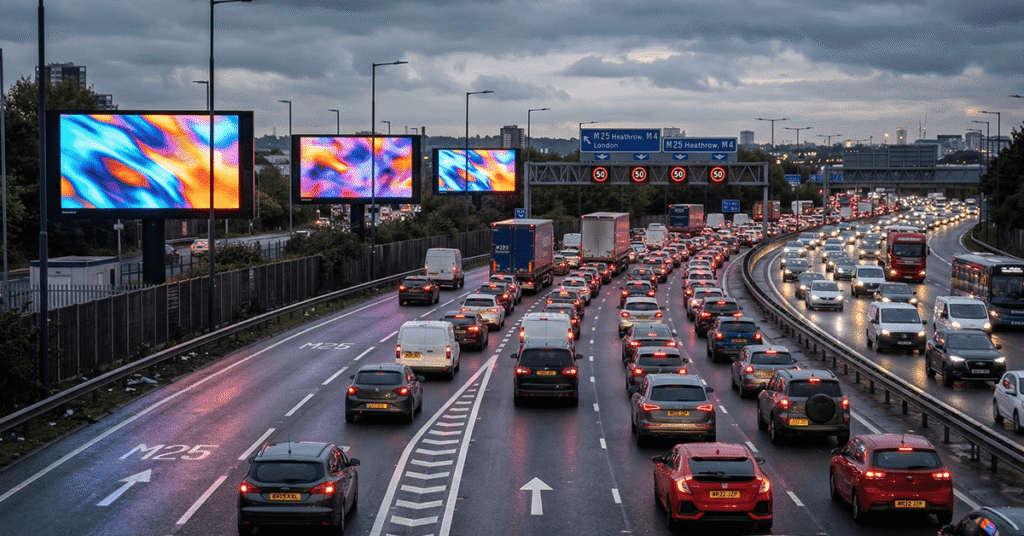
Picture this: you’re stuck in M25 traffic, nursing a lukewarm coffee from a service station, when a massive screen lights up with a cheeky ad for the latest Nando’s peri-peri deal. It’s not just grabbing your attention; it’s changing the game for how brands reach us Brits. Digital billboard advertising has exploded onto the scene, blending eye-popping visuals with smart tech to make static old posters look positively prehistoric.
Let’s be honest, traditional billboards have served us well for decades. They’ve shouted out everything from Sunday roast specials to election promises. But now, with digital versions popping up everywhere from London high streets to Manchester motorways, things feel different. These screens don’t just sit there; they move, they update, they even react to the time of day. Quick-service restaurants flash drive-thru bargains at rush hour, while car dealerships showcase the latest stock as it rolls off the lorry. No more waiting weeks for a print job; content swaps in seconds from a laptop miles away.
And the reach? Blimey, it’s massive. Over 98% of the UK population clocks eyes on out-of-home ads every single week. That’s more folks than you’ll find glued to the telly or scrolling Instagram. Networks like those run by top players hit 32 million people monthly, outpacing even big beasts like The Sun or ITV2. Place one on a busy corridor, and you’re talking 25,000 to 50,000 impressions a day per screen. High-traffic spots? Hundreds of thousands weekly. It’s no wonder brands are queuing up.
The Numbers Don’t Lie: Engagement Through the Roof
Ever wondered why these glowing giants work so well? Start with the stats. Digital billboards crank engagement up by as much as 400% over their paper cousins, thanks to motion graphics and dynamic content that snags your gaze mid-commute. People hit their phones 17% more after spotting one, with 66% of those taps going straight to the brand. Mobile retargeting seals the deal, turning a fleeting glance into a proper purchase.
ROI figures back it up too. Industry boffins reckon you can pull in £4 to £5 for every quid spent, sometimes hitting 38% returns on digital campaigns alone. Cheaper than TV by 80%, half the price of newspapers, and way more reliable than radio slots that get buried in chatter. Plus, with analytics baked in, you track impressions, dwell time, even foot traffic lifts. A/B test a cheeky slogan against a flashy video, and boom: data tells you what’s converting commuters into customers.
But it’s not all beer and skittles. Those screens guzzle electricity like a family of five at a carvery. A typical double-sided unit munches 41,627 kWh a year, enough to power 11 average UK homes. Run at max brightness? That’s 36 households’ worth. With 30,000 digital out-of-home panels sprouting across Blighty, and numbers climbing 6% yearly (or more like 9% in some forecasts), the energy bill for the nation is stacking up. Ad firms love the profit from cycling six ads a minute, but green campaigners aren’t chuffed.
Real-World Wins and Everyday Magic
Take auto dealers: they rotate finance deals and event promos in real time, shifting slow stock faster than you can say “zero percent APR.” Municipalities blast traffic warnings or weather alerts without a printer in sight. Sports venues hype live scores and sponsor shoutouts, pulling fans deeper into the action. Even schools and churches use them for event reminders, proving it’s not just for mega-brands.
Cost-wise, the upfront hit stings less over time. Ditch printing crews and vinyl waste, and you’re saving on labour, fuel, and landfill. Remote updates mean no vans crawling the M1 for a swap. Environmentally, it’s a mixed bag; less paper is ace, but that power draw has folks calling for solar-powered upgrades or dimmer settings after dark.
Compared to online ads, digital billboards cut through the noise. No ad blockers here; you can’t swipe away a 48-sheet behemoth looming over the roundabout. Younger crowds, hooked on their screens, still respond to this unmissable OOH stuff, especially with QR codes linking straight to apps or sites. In 2023, two-thirds of UK out-of-home spend went digital, and that ticked up again last year. It’s evolving fast, with sensors tracking who lingers and predictive tools fine-tuning the next loop.
Is It Right for Your High Street Hustle?
For small businesses, the barrier’s dropping. Leasing models and revenue shares open doors that once slammed shut. Imagine a Manchester cafe owner pushing lunch deals to the lunch rush, or a Bristol boutique timing sales to weekend shoppers. It’s flexible, measurable, and punches above its weight against pricey digital rivals where CPMs soar on targeted platforms.
Of course, location is king. Nail a spot near transit hubs or urban arteries, and you’re golden. Get it wrong, and it’s wasted watts. But with coverage swelling in nine out of 13 UK regions, options abound. Brands mixing it with social or TV see the biggest lifts, creating that full-funnel buzz.
So next time you’re cursing the A-road crawl, spare a thought for the digital dazzlers overhead. They’re not just ads; they’re the future of grabbing Britain’s attention, one pixel at a time. Whether you’re a startup or a high-street heavyweight, this medium’s got the stats, the sizzle, and the smarts to make your message stick.
