

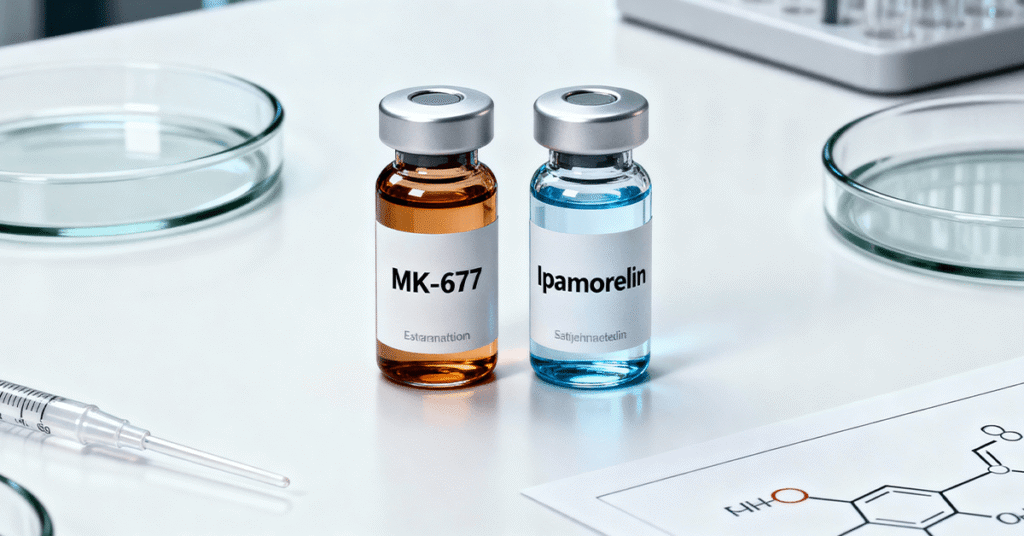
In the realm of research related to growth hormones and their secretagogues, MK-677 and Ipamorelin are prominent compounds that have attracted significant attention for their potential applications. Delving into the differences and characteristics of these molecules is crucial for scientific understanding and experimental design. Exploring these substances offers insights into their mechanisms, benefits, and potential risks. In this article, we provide a thorough examination of both MK-677 and Ipamorelin, detailing pertinent information for informed experimentation and study below.
Understanding MK-677 and Ipamorelin: The Basics for Research Purposes

MK-677, or Ibutamoren, is an orally active growth hormone secretagogue that mimics ghrelin to stimulate growth hormone release. Its non-peptide structure allows for convenient administration and sustained elevation of circulating hormones, making it a valuable tool in research focused on muscle growth, metabolism, and age-related hormone decline.
Ipamorelin, a selective pentapeptide GHRP, specifically triggers growth hormone release with minimal impact on other hormones like cortisol. Researchers studying anabolic effects often consider the distinct mechanisms and profiles of these compounds when choosing between MK-677 and Ipamorelin to optimize outcomes and ensure precise, reliable results.
Mechanism of Action: How MK-677 and Ipamorelin Influence the Body
MK-677 functions by mimicking ghrelin, binding to receptors in the brain to stimulate growth hormone release from the pituitary gland, which triggers a cascade of hormonal effects, including increased insulin-like growth factor 1 (IGF-1), important for muscle growth and metabolism. Ipamorelin, in contrast, acts selectively on the growth hormone secretagogue receptor, promoting targeted growth hormone release while minimally affecting cortisol and other hormones, making it valuable for studies focused on isolating growth hormone effects.
The choice between MK-677 and Ipamorelin often depends on their mechanisms: MK-677 offers a prolonged, potent effect, whereas Ipamorelin provides specificity, helping researchers control variables and better predict physiological responses in experimental settings.
Comparing the Benefits and Uses of MK-677 and Ipamorelin in Research
Researchers are drawn to MK-677 for its wide-ranging potential benefits, particularly in promoting growth, muscle mass, and bone density. Its oral bioavailability facilitates administration in experimental settings, and it may also enhance sleep quality and cognitive function, areas of interest in aging and performance studies. Ipamorelin is valued for its specificity and milder side-effect profile, making it suitable for research requiring precise growth hormone increases, such as metabolic or healing studies, while minimizing effects on other hormones.
Comparative studies highlight differences in their physiological impact, guiding therapeutic exploration. MK-677’s robust anabolic effects are useful in muscle-wasting research, whereas Ipamorelin supports recovery and repair through targeted growth hormone stimulation.
Side Effects and Safety Profile: MK-677 vs. Ipamorelin

MK-677 and Ipamorelin have shown potential in research, but careful attention to safety is essential. MK-677 is linked to increased appetite, temporary rises in blood glucose, and possible water retention, with long-term effects still under investigation. Ipamorelin is generally milder, causing fewer systemic hormonal disturbances, though unexpected physiological responses remain possible.
Safety considerations extend to dosage, administration schedules, and interactions with other substances, emphasizing the need for thorough monitoring of research subjects. Evaluating the risk-benefit balance is crucial, and documenting adverse reactions contributes to a deeper understanding of each compound’s safety profile, supporting responsible experimental design and future clinical exploration.
Legal Status and Availability for Researchers: Navigating the MK-677 and Ipamorelin Market
The legal status of research chemicals such as MK-677 and Ipamorelin varies widely across different jurisdictions, requiring researchers to carefully navigate laws regarding their purchase, possession, and use to maintain compliance. Equally important is the availability of high-quality, pure compounds, which are essential for producing accurate and reliable study results. Researchers must obtain these chemicals from reputable suppliers who can provide documentation confirming their composition and purity.
Market fluctuations in pricing and accessibility can influence the feasibility of long-term studies, making financial planning a key consideration. Consistent access to these substances is necessary to ensure replicable scientific outcomes and maintain the integrity of research projects.
Overall, the exploration and comparison of MK-677 and Ipamorelin illuminate the intricacies involved in growth hormone research. The potential of these secretagogues to advance scientific understanding is vast, provided their use is approached with precision, caution, and a comprehensive grasp of their mechanisms, benefits, and legal context.
