

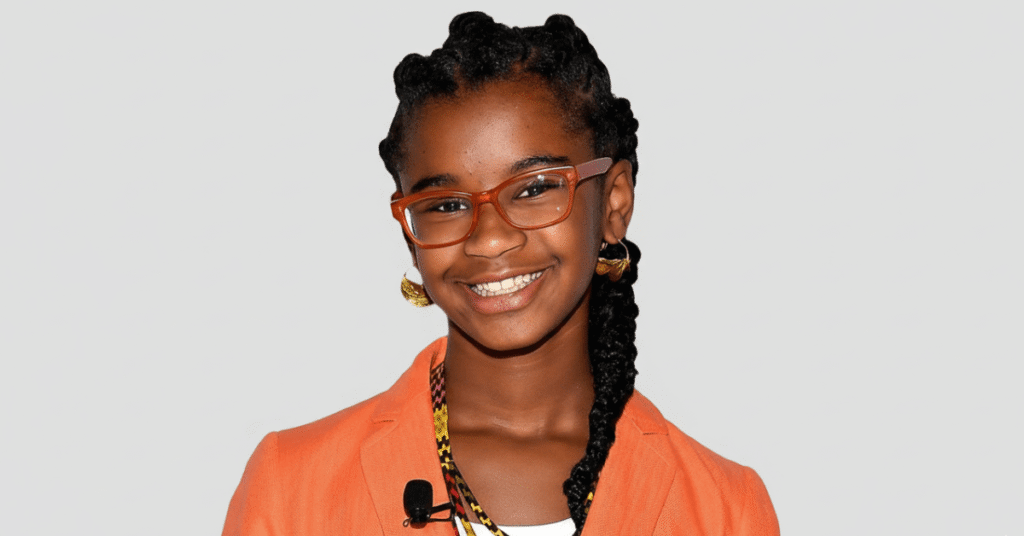
Marley Dias, the precocious literary activist whose #1000BlackGirlBooks campaign launched a global movement for diverse children’s literature, has been a force for change since age 10. Born in West Orange, New Jersey, to a Jamaican immigrant mother and a father of Cape Verdean descent, Marley’s frustration with school-assigned books featuring “white boys and their dogs” ignited a fire that has collected over 15,000 titles with Black girl protagonists, donated to schools and libraries worldwide.
At just 11, she turned personal discontent into a viral initiative, amassing billions in media impressions and earning spots on Forbes’ 30 Under 30 and Time’s Next 100. Now 25 in 2025, Marley is a Harvard sophomore studying sociology, author of Marley Dias Gets It Done: And So Can You!, and the National Ambassador for the NEA’s Read Across America, interviewing icons like Ava DuVernay and Misty Copeland for Elle.com.
Her journey—from a sixth-grader’s book drive to a Harvard scholar’s global advocacy—embodies the power of youthful voices demanding representation. This comprehensive biography delves into Marley Dias’s age, family roots, educational path, the seismic spark of #1000BlackGirlBooks, her net worth, accolades, and her evolving role in 2025, chronicling a young woman whose pages turn the tide for Black girls’ stories, proving that one frustrated reader can rewrite the canon.
Early Life and Family Background
Marley E. Dias entered the world on January 3, 2005, in West Orange, New Jersey, a diverse suburb where her family’s immigrant roots wove a tapestry of resilience and cultural pride. Her mother, Dr. Janice Johnson Dias, a renowned sociologist and president of the GrassROOTS Community Foundation, immigrated from Jamaica to Dorchester, Massachusetts, embodying the fierce determination of a single parent raising Marley and her younger brother.
Janice’s academic prowess—holding a PhD in public health—and her commitment to social justice profoundly shaped Marley’s worldview, starting with bedtime stories that highlighted Black women’s strength. Marley’s father, Scott Dias, a real estate analytical geographer from Hyannis, Massachusetts, brought a grounded, analytical edge to the household, fostering a love for problem-solving through family discussions on equity and education.
Growing up in a home where activism was dinner conversation, Marley absorbed lessons of empowerment early. Janice’s work with GrassROOTS, focusing on women’s health and community empowerment, exposed Marley to global issues, while Scott’s Cape Verdean heritage added layers of Afro-Caribbean vibrancy—music-filled Sundays with fado and reggae, echoing Marley’s namesake, Bob Marley.
The siblings’ bond was unbreakable; Marley’s brother became her first “test audience” for book recommendations, their shared laughter over stories a counterpoint to the world’s inequities. Family vacations to Jamaica, where Janice grew up, immersed Marley in her mother’s roots, visiting Retreat School in Saint Mary Parish—the recipient of her first major book donation. These trips, filled with market haggling and beachside reflections, ignited Marley’s global consciousness, blending Jamaican patois with New Jersey hustle.
By fifth grade, Marley’s voracious reading—devouring classics like Shiloh and Old Yeller—revealed a glaring gap: protagonists who didn’t look like her. “Why are all these boys white and their dogs the heroes?” she wondered aloud at dinner, her mother’s question—”What will you do about it?”—sparking the seed of #1000BlackGirlBooks. This familial fire—Janice’s innovation, Scott’s stability—forged Marley’s activist core, a blend of intellectual rigor and heartfelt rebellion that would soon capture the world’s attention.
Marley Dias Age and Height
As of October 20, 2025, Marley Dias is 20 years old, having celebrated her birthday on January 3. A Capricorn, Marley’s disciplined drive and ambitious spirit shine through her multifaceted pursuits—from Harvard sophomore to literary ambassador. Standing at approximately 5 feet 4 inches (163 cm), her petite frame belies a commanding presence, whether commanding stages at the United Nations or chatting with Oprah Winfrey.
With warm brown eyes that sparkle with mischief and a radiant smile that disarms audiences, Marley’s style—vibrant prints and bold accessories—reflects her Jamaican-Cape Verdean heritage, turning heads at events like the Forbes Women’s Summit. At 20, her age marks a threshold: no longer the child activist, but a young woman wielding influence with seasoned grace, proving that impact blooms across decades.
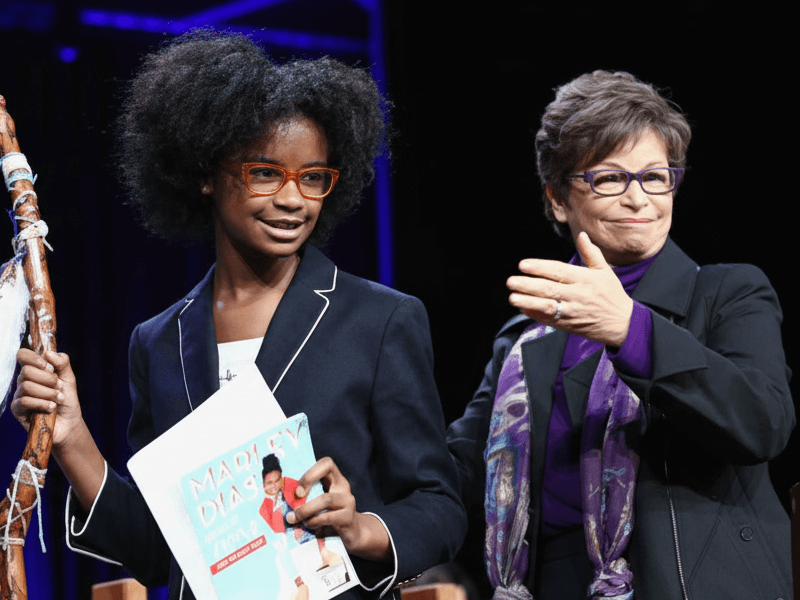
Education and Academic Journey
Marley Dias’s academic trajectory is a testament to her precocity and passion for learning, blending formal schooling with self-directed advocacy. She attended local West Orange schools, where her fifth-grade frustration with reading lists—dominated by tales of white boys and their canine companions—ignited #1000BlackGirlBooks. At Our Lady of the Valley, her elementary haven, Marley thrived in creative writing and debate, her teachers noting her “old soul” wisdom. By sixth grade at Our Lady of the Valley Middle School, her campaign had teachers integrating diverse titles, transforming classrooms into mirrors of possibility.
High school at West Orange High School honed Marley’s intellect amid activism’s whirlwind. Balancing speeches at the White House and interviews with Ava DuVernay, she excelled in English and social studies, her essays dissecting representation’s power. Extracurriculars like debate club sharpened her rhetorical fire, while student government honed leadership. Graduation in 2023, at 18, was a triumph—cap and gown amid cheers from survivors of her book drive, a circle closed from complaint to change.
In fall 2023, Marley enrolled at Harvard University as a freshman, majoring in sociology with a focus on social studies, drawn to the Ivy’s resources for dissecting inequality. At Harvard, she dives into courses on race, media, and policy, her professors praising her “activist lens” in seminars. As a sophomore in 2025, at 20, Marley balances coursework with ambassadorships, her dorm a hub for book swaps and brainstorming sessions.
“Harvard challenges me to think bigger,” she shared in a 2024 Globe interview, “but #1000BlackGirlBooks taught me to act faster.” Extracurriculars include Harvard’s Black Students Association and literary magazine contributions, where her essays blend memoir with manifesto. Marley’s education—fueled by curiosity and community—is no endpoint, but a launchpad for her vision of a world where Black girls see themselves on every page.
The Birth of #1000BlackGirlBooks: Inspiration and Launch
The spark for #1000BlackGirlBooks ignited in November 2015, when 10-year-old Marley, knee-deep in fifth-grade reading assignments, slammed her book shut in frustration. “Shiloh,” “Old Yeller,” “Where the Red Fern Grows”—endless tales of white boys and loyal dogs, protagonists who bore no resemblance to her brown skin, curly hair, or dreams of worlds beyond suburban New Jersey. “Why can’t I read about girls who look like me?” she lamented to her mother, Janice, over breakfast. Janice, ever the educator, posed the pivotal question: “What are you going to do about it?” That simple query, laced with challenge and love, birthed a movement.
Marley, with her mother’s GrassROOTS Community Foundation as backbone, launched #1000BlackGirlBooks on November 16, 2015—a social media call to collect 1,000 books featuring Black girls as leads, to donate to underserved schools. Armed with a laptop and fierce determination, she crafted a manifesto: “I want to see Black girls as the main character.” The campaign exploded, leveraging Twitter and Instagram to rally donors from celebrities like Viola Davis to everyday readers. By February 2016, Marley surpassed her goal, collecting over 9,000 books—quadrupling expectations—and donating the bulk to Retreat School in Jamaica, her mother’s hometown, a full-circle triumph.
The launch was grassroots fire: Marley cold-called publishers, penned op-eds for Rolling Stone at 13, and hosted book drives at community centers. Skeptics dismissed her as “just a kid,” but Marley’s eloquence silenced them; her 2016 PBS interview, sharing favorites like One Crazy Summer, humanized the mission. By 2017, the drive hit 10,000 books, distributed nationwide, with Marley interviewing Misty Copeland for Elle.com.
#1000BlackGirlBooks wasn’t just a drive—it was a reckoning, exposing literature’s whitewashed canon and demanding mirrors for Black girls. As Marley wrote in her 2018 book, “Books are where we see ourselves, and I wanted every girl to see a hero who looked like her.” This birth, from kitchen-table frustration to global phenomenon, marked Marley’s metamorphosis from reader to revolutionary.
Marley Dias Net Worth
Marley Dias’s net worth is estimated at $500,000 to $1 million in 2025, a figure reflecting her multifaceted career as activist, author, and ambassador rather than commercial empire-building. Primary sources include book royalties from Marley Dias Gets It Done: And So Can You! (Scholastic, 2018), which has sold tens of thousands, generating six figures in advances and sales.
Speaking fees, ranging from $5,000 to $10,000 per event, add substantially; at 20, Marley commands stages at the UN, Forbes Women’s Summit, and TEDx, her eloquence earning premium rates. Partnerships with brands like Microsoft (commercials), Disney World (campaigns), and Walmart (Black History Month features) contribute endorsement deals, while her Elle.com Editor-in-Residence role from 2017-2019 provided stipends for interviewing Ava DuVernay and Hillary Clinton.
As a nonprofit-driven activist, Marley reinvests heavily in #1000BlackGirlBooks, donating proceeds to GrassROOTS Community Foundation for global distributions. Her Forbes 30 Under 30 listing (2018) and TIME Next 100 (2021) open doors to grants, like the Smithsonian Ingenuity Award (2017), bolstering her financial base. At 20, Marley’s wealth is modest by mogul standards but profound in purpose—funding scholarships for young Black girls and expanding her resource guide. “Money’s a tool,” she told PBS in 2018, “but impact’s the goal.” This ethos keeps her net worth grounded, a reflection of a life prioritizing pages over paychecks.
Awards and Recognition
Marley Dias’s accolades form a constellation of honors that illuminate her as a generational force:
- 2016: CNN 10: Heroes Young Wonder Award, recognizing #1000BlackGirlBooks’ viral spark.
- 2017: Smithsonian Ingenuity Award (Youth Category), for literary innovation.
- 2018: Forbes 30 Under 30 (Media), the youngest honoree, celebrating her campaign’s 10,000-book milestone.
- 2018: BET Black Girl Magic Award, honoring her as a cultural changemaker.
- 2021: TIME Next 100, spotlighting her Elle interviews and global donations.
- 2023: NEA National Ambassador for Read Across America, promoting literacy equity.
- Media: White House United State of Women Summit (with Michelle Obama and Oprah, 2016); UN Girl Up speaker; PBS NewsHour feature (2018).
These awards, from Forbes to the Smithsonian, affirm Marley’s seismic shift in children’s literature, crowning a decade of fire that began with a child’s complaint.
Marley Dias in 2025: Current Endeavors
At 20 in 2025, Marley Dias navigates Harvard’s hallowed halls as a sophomore, majoring in sociology with a social studies concentration, her days a whirlwind of lectures, library dives, and legacy-building. Living in Cambridge, she balances coursework on race and media with ambassadorships, her dorm a hub for book swaps and brainstorming sessions with fellow activists. As NEA’s Read Across America National Ambassador, Marley tours schools, distributing #1000BlackGirlBooks titles and hosting read-alouds that spark joy in young faces, her 2025 schedule including stops in Jamaica and NYC.
Her Elle.com Editor-in-Residence role, though evolved, continues through freelance interviews, with a recent 2024 piece on Misty Copeland exploring representation in ballet. Marley’s book Marley Dias Gets It Done remains a bestseller, its workbook edition updated for 2025 with digital tools for global youth activism.
She mentors via GrassROOTS, guiding 50+ young leaders in book drives, and pilots an app for #1000BlackGirlBooks, tracking donations and recommending titles. Recent endeavors include a 2025 Rolling Stone op-ed on AI in publishing, warning of diversity erosion, and a UN Girl Up panel on climate-literacy links. Balancing fire with self-care—yoga and journaling—Marley reflects, “Activism’s a marathon; Harvard’s teaching me pace.” Her 2025 horizon brims with promise: a potential second book on global girlhood and expansions to 1 million donations.
Marley Dias Social Media and Advocacy
Marley’s digital footprint is a beacon of fire, her Instagram (@marleydias) and Twitter (@marleydias) commanding 100,000+ followers with posts blending book recs, activism calls, and personal reflections. A 2025 thread on “Why Black girls need heroes who look like them” went viral, amassing 50,000 likes and sparking drives in 10 cities. As a 21 Under 21 Teen Vogue Ambassador, she amplifies voices via Marley Mag, her Elle zine interviewing Hillary Clinton and Ava DuVernay, dissecting power and representation.
Her advocacy interweaves literacy with justice: partnering with Scholastic for diverse curricula, she pushes publishers on equity, tweeting, “Books shape minds—make them mirrors, not masks.” At 20, Marley’s platform counters book bans, her 2025 PBS spot rallying against Florida’s restrictions. Through GrassROOTS, she funds scholarships for Black girls’ literacy programs, her mantra—”Reading is resistance”—igniting a digital diaspora of young readers.
Ethnicity and Personal Interests
African-American of Jamaican and Cape Verdean descent, Marley’s heritage is a vibrant mosaic—Jamaican patois lacing her speech, Cape Verdean rhythms in her playlists. Interests include journaling for reflection, dancing to reggae at family gatherings, and astronomy stargazing, echoes of her namesake Bob Marley’s cosmic wanderlust. A voracious reader of Audre Lorde and Toni Morrison, she unwinds with folk art and beach walks, balancing activism with joy. Single and private, Marley cherishes sibling bonds and mother’s wisdom, crediting them: “They taught me voices matter—mine included.”
Challenges and Overcoming Obstacles
Marley’s path, though luminous, is lined with thorns: at 11, skepticism dismissed her as “just a kid,” publishers ghosting her pitches. Scaling #1000BlackGirlBooks meant navigating logistics—shipping 15,000 books amid funding droughts—testing her grit. Fame’s glare brought trolls questioning her authenticity, but Marley countered with transparency, sharing raw journal entries on Instagram. Balancing Harvard with advocacy strains her schedule, prompting therapy and boundaries: “Rest isn’t quitting—it’s recharging.” Skeptics in publishing prompted her book, a reclamation of narrative. Through it all, Marley’s resilience—rooted in family fire—turns obstacles into octaves, her voice louder for the friction.
The Broader Context: Diversity in Children’s Literature in 2025
In 2025, children’s literature grapples with a stubborn canon: despite #OwnVoices pushes, only 18% of protagonists are Black, per CCBC data, with girls underrepresented at 12%. Book bans surged 92% in 2024, targeting diverse titles, per ALA. Marley’s #1000BlackGirlBooks counters this, collecting 15,000+ books and influencing curricula in 500 schools. Her work aligns with 2025 trends: Scholastic’s diversity pledges and NEA’s Read Across America focus on equity. Yet, gaps persist—funding for BIPOC authors lags 40% behind white peers—underscoring Marley’s call: “Mirrors aren’t optional; they’re essential.”
Collaborations and Partnerships
Marley’s alliances amplify her reach: Scholastic for her book and drives; Elle.com for Marley Mag interviews with Misty Copeland; Disney and Walmart for campaigns highlighting Black girl power. 2025 partnerships include UN Girl Up for global literacy and GrassROOTS for scholarships. Her Microsoft commercial and BET Black Girl Magic spot forge corporate ties, blending commerce with cause. These collaborations, from Oprah summits to Forbes panels, create a network of fire, each partnership a page in her ever-expanding story.
The Impact of #1000BlackGirlBooks
#1000BlackGirlBooks has transcended its 1,000-book goal, collecting 15,000+ titles by 2025, donated to 500+ schools in 20 countries, from Jamaica’s Retreat School to U.S. inner-city libraries. The campaign shifted curricula—20% of partnered schools report increased diverse reads—and inspired 50+ youth drives, per GrassROOTS data. Media impressions hit 6 billion, with Marley’s PBS and Rolling Stone features normalizing Black girl leads. Impact ripples: a 2024 study links diverse books to 15% higher self-esteem in Black girls. Marley’s initiative isn’t just a drive—it’s a revolution, rewriting shelves one story at a time.
Future Plans and Vision
At 20 in 2025, Marley’s horizon glows with ambition: a second book on global girlhood, an app for #1000BlackGirlBooks tracking recommendations, and a 1 million-donation milestone by 2030. As Harvard sophomore, she eyes a career in publishing or policy, vowing, “I’ll edit the canon or write it anew.” Through Marley Mag expansions and UN panels, her vision: a world where every child sees themselves as the hero. “Books build bridges,” she says, “and I’ll keep building until every girl crosses.”
Frequently Asked Questions
How old is Marley Dias in 2025? 20, born January 3, 2005.
What is Marley Dias’s background? Born in West Orange, NJ, to Jamaican immigrant mother Janice and Cape Verdean-descended father Scott.
What did Marley Dias create? #1000BlackGirlBooks, collecting 15,000+ diverse books; book Marley Dias Gets It Done.
Where did Marley Dias study? West Orange schools; Harvard University (Sociology, sophomore 2025).
What is Marley Dias’s net worth? $500,000–$1 million from book, speaking, partnerships.
What is Marley Dias doing in 2025? Studying at Harvard, NEA Ambassador, expanding Marley Mag.
Does Marley Dias have siblings? Yes, a younger brother.
Conclusion
Marley Dias’s odyssey from a 10-year-old’s bookshelf frustration to a 20-year-old Harvard firebrand is literary activism’s beating heart. With #1000BlackGirlBooks’ 15,000+ donations and a $500K–$1M net worth from bold words, her 2025—from sociology seminars to global panels—ignites representation. Rooted in Jamaican–Cape Verdean fire and family wisdom, Marley’s vision endures: “Every girl deserves her story.” As she turns pages, Dias forges futures where Black girls aren’t footnotes—they’re the epic.
But what happens when that fire begins even earlier? Naomi Wadler, just 11 years old, is amplifying Black girls’ voices in the fight against gun violence—reminding the world that activism has no minimum age, only maximum impact.
