

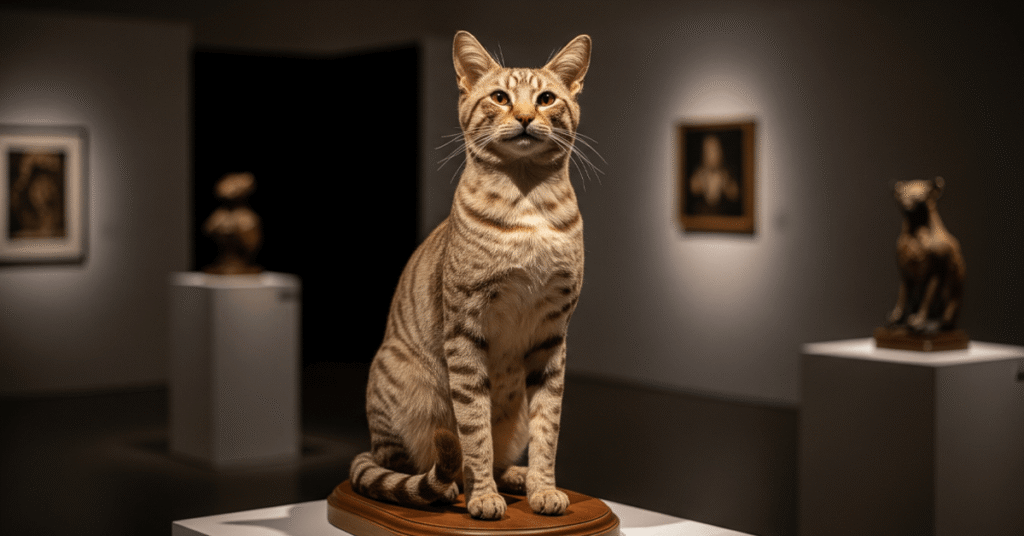
The loss of a pet can feel devastating, and the idea of preserving your beloved cat as a lifelike keepsake might seem both unsettling and profoundly sentimental. Taxidermy cat preservation has gained traction, blending ancient practices with contemporary grief rituals, as pet owners look for ways to push back against the finality of death.
From the mummified cats of ancient Egypt to Victorian oddities and today’s complex ethical debates, this guide explores the full story of taxidermy cats: their historical significance, the preservation process, legal challenges, cultural issues, and real-world costs. Whether you’re mourning a feline companion or simply curious, we’ve compiled over 2,500 words of in-depth information to help you navigate the eerie elegance of preserving a pet for eternity.
For alternatives like freeze-drying or skeletal articulation, check our Pet Preservation Alternatives Guide.
The Origins and History of Taxidermy Cats: From Pharaoh’s Pets to Victorian Curios
Taxidermy cat practices trace back millennia, evolving from sacred rites to sentimental art. The earliest known examples originate from ancient Egypt around 2200 BC, where pharaohs mummified cats—sacred to Bastet, the goddess of protection—as eternal guardians. These weren’t simple mounts, but embalmed bodies injected with resins, oils, and spices, buried in tombs alongside humans. Over 300,000 cat mummies have been discovered, many at the Bubastis temple, symbolizing fertility and domestic bliss.
In the Middle Ages, European falconers stuffed birds for reuse, but cats remained rare until the Renaissance. The oldest surviving large mount is a 16th-century Italian rhinoceros at Ponte Nossa Cathedral—rudimentary by today’s standards, but a milestone. By the 1700s, Dutch innovators refined bird taxidermy, using wire armatures and basic tanning.
The Victorian Era (1837-1901) saw the explosion of pet taxidermy, spurred by Queen Victoria’s mourning. Households commissioned anthropomorphic scenes, like Walter Potter’s “Kittens’ Tea Party” (1860s), where dressed-up felines hosted mock gatherings. Potter’s Bramber Museum housed 10,000 specimens, including boxing squirrels and a “Death of Cock Robin” tableau with taxidermy cats as mourners—dismantled in 2003 amid ethical debates. This period’s “crap taxidermy” (e.g., mangled lions from hearsay descriptions) birthed memes, but also artistry, with Carl Akeley’s 1900s clay mannequins revolutionizing realism.
The 20th century saw shifts: post-WWII, taxidermy waned as conservation rose, but pet loss spiked demand. The 1970s “Orvillecopter”—a cat-helicopter hybrid by artist Bart Jansen—ignited controversy, blending taxidermy with robotics. Today, rogue taxidermy (e.g., Maurizio Cattelan’s dressed cats) and ethical mounts (e.g., Precious Creature’s custom Persians) thrive, with viral grief trends fueled by TikTok stars like Pot Roast, a scruffy tabby who “looks taxidermied.”
Era Key Milestone Famous Example
- Ancient Egypt (2200 BC): Mummification for burial | Bastet temple cats
- Renaissance (1500s): First large mounts | Italian rhino
- Victorian (1800s): Anthropomorphic scenes | Potter’s Kittens’ Wedding
- Modern (1970s-Now): Rogue art & pet memorials | Orvillecopter; Pot Roast
This timeline underscores the evolution of taxidermy cats from divine symbols to deeply personal memorials.
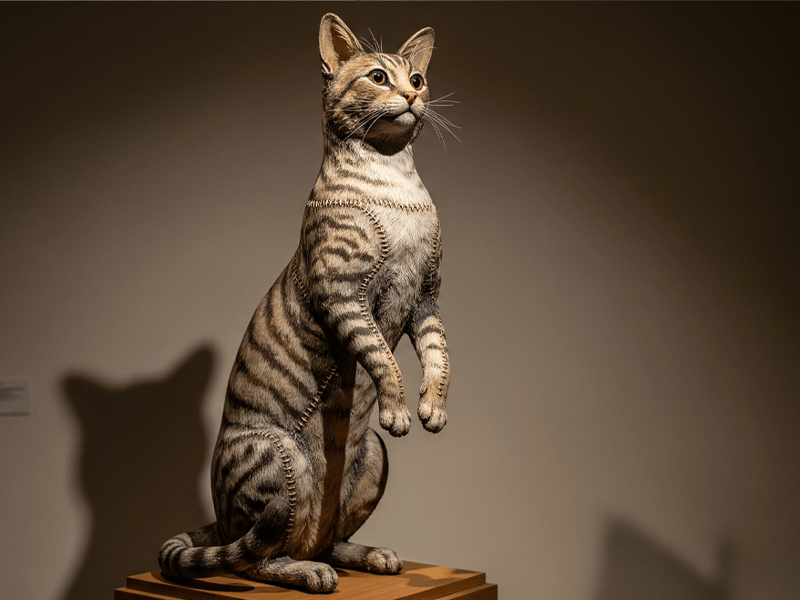
How to Taxidermy a Cat: A Step-by-Step Ethical Guide
DIY taxidermy cat projects spark Reddit debates, but professionals warn: Start small (e.g., mice) to avoid emotional pitfalls. For pets, freeze immediately post-mortem to preserve viability. Costs? $750-$3,500 professionally; DIY risks failure. Here’s a humane, legal overview—consult licensed experts like Animal Family.
Preparation (1-2 Days):
- Handle with Care: Post-euthanasia, refrigerate (not freeze initially) to halt decay. Wrap in towels; avoid embalming fluids.
- Gather Supplies: Scalpel, borax (preservative), mannequin form ($50-200), glass eyes ($10-50), tanning solution.
- Legal Check: Ensure pet ownership proof; no wild cats without permits.
Skinning and Fleshing (2-4 Hours):
- Incision: Lay cat ventral-side up; cut from chin to tail along midline, avoiding nipples/fur. Peel skin like a glove, preserving face/ears.
- Remove Flesh: Scrape fat/muscle with fleshing tool; soak in borax water 24-48 hours. Pro tip: Save skeleton for articulation.
Tanning and Drying (3-7 Days):
- Tan Hide: Submerge in alum/salt solution (1:10 ratio) for 5 days; rinse/neutralize. Dry flat, powder with cornstarch.
- Mannequin Fit: Sculpt foam/clay form to match measurements (e.g., 12″ Persian); insert bones for realism.
Mounting and Finishing (1-2 Weeks):
- Sew and Stuff: Slip skin over form; stitch incisions with waxed thread. Glue eyes/teeth; groom fur.
- Pose Naturally: Reference photos for “snuggle cat” vibe. Dry in ventilated space.
- Seal and Display: Brush with taxidermy protectant; avoid sun/humidity.
Warnings: The emotional toll of DIY is real—many regret it. Professionals take 4-6 months; expect $1,150 base for a 6lb cat. For big cats (e.g., bobcats), add hunting tags.
Ethical and Legal Controversies: Is Taxidermy Cat Right for You?
Taxidermy cats straddle grief and grotesquery, sparking fierce debates. Legally, US owners can commission mounts for personal use—no federal ban on pets. However, the Dog and Cat Protection Act (2000) prohibits selling fur/products interstate, so no eBay flipping of Fluffy. Inheritance/gifting? Fine. Auctions? Often discarded. In Europe, the rules are more relaxed—vintage French cats sell freely. Transporting taxidermy? Permits are required for cross-state transactions.
Ethically? The practice is polarizing. Professionals like Gotham emphasize dignity, using eco-tanning and pre-consent for ethical taxidermy. Critics argue it verges on “necrophilia-lite,” citing failed mounts that haunt (e.g., “Frankenstein’s Cat” by teacher Jennifer Clark—grinning horror from a beginner’s error). Rogue art amplifies: Tinkebell’s controversial cat-purse (a self-euthanized cat made into a “statement” piece) sparked outrage, with PETA issuing strong condemnations.
Cultural angles: Victorian “stuffed shirts” mocked poor taxidermy, while today, memes surrounding “Frankenstein’s Cat” and viral TikToks like Pot Roast blend humor with grief. Vulture culture (collecting bones rather than mounts) has gained popularity, offering an alternative with less ethical conflict and a lower price tag ($50-200).
Famous Taxidermy Cats: Icons, Fails, and Cultural Claws
Taxidermy cats have clawed their way into popular culture. Ancient Egypt is home to “Mitten,” a mummified cat that guarded tombs. In the Victorian Era, Walter Potter’s kittens (dressed in veils) were part of his whimsical dioramas, attracting crowds.
Modern Icons:
- Orvillecopter (2012): A cat-helicopter hybrid created by artist Bart Jansen to protest traffic deaths, sparking global controversy.
- Maurizio Cattelan’s “Felix” (1994): A hanging, salted cat sold for $6 million, igniting debates on “dead art.”
Fails:
- “Frankenstein’s Cat” (2021): A DIY project by teacher Jennifer Clark went viral for its “hotdog body” and “terrifying grin,” becoming a meme sensation.
- Positive Examples: Lauren Kane’s custom Persian at Precious Creature, a beautifully crafted mount, costs around $2,000.
Costs and Practicalities: What to Expect Financially
Considering a taxidermy cat? Here’s a breakdown of costs:
- Base Price: $750-$1,150 for a small (<6lb) full mount.
- Additional Costs: $39 per lb overage; specific poses (sitting +50%, walking +100%).
- Rush Orders: Additional 50% ($575 extra).
- Shipping: $150 box + actual shipping costs.
- Alternatives: Bones ($200-500); freeze-drying ($2K-3.5K).
Regional Variance: In the US, professionals like Martinez Brothers charge $1,000+ for taxidermy cats. Etsy replicas cost between $50-$200 for faux mounts. Hidden fees include eyes ($20-100) and transport permits ($50). While the emotional value may be priceless, you’ll want to weigh it against alternatives like cremation ($100-300).
Cultural Impact and Modern Trends: From Memes to Memorials
Taxidermy cats transcend their practical use—they’re a canvas for grief. Online trends on X (formerly Twitter) include posts like “Snuggle cat forever” and “Pet Sematary horror,” sparking both humor and reflection. Popular references include taxidermy cats in The Office and Scrubs. As a trend, sustainable sourcing (such as using roadkill) and “vulture culture” (cleaning bones rather than mounting them) are gaining traction.
The future of taxidermy cats? As 3D printing technology advances, it may offer a way to avoid the ethical pitfalls of using real animals while still capturing the essence of a beloved pet.
FAQs: Your Taxidermy Cat Questions Answered
Is taxidermy cat legal?
Yes, for personal use; however, selling fur or mounts interstate is prohibited in the US.
How much does taxidermy cat cost?
Prices range from $750 to $3,500, with a base of $1,150 for small cats.
How long does it take?
Professional taxidermy can take 4-6 months, while DIY projects typically take 2-4 weeks.
Are there ethical concerns?
DIY taxidermy can lead to regret; it’s safer to consult with professionals.
Famous examples?
Notable taxidermy cats include Orvillecopter, Potter’s Kittens, and the viral “Frankenstein’s Cat.”
What are the risks of DIY taxidermy?
Emotional tolls and failure; it’s best to start with small animals like mice.
Conclusion: Eternal Paws—Weighing the Whiskers of Legacy
Taxidermy cats embody a unique blend of love, loss, and legacy—from the mummified guardians of ancient Egypt to modern internet memes. This guide provides comprehensive coverage of the practice, filling in the gaps left by other resources. Whether you’re commissioning a $1,000 mount or exploring alternatives, it’s important to consider both the emotional and ethical dimensions of this deeply personal decision.
