

Greatest Hits Radio has quickly become one of the UK’s most popular music stations, known for playing the biggest songs from the 70s, 80s, and 90s while attracting legendary presenters like Ken Bruce and Simon Mayo. With its rapid rise in audience numbers, national reach, and a strong mix of nostalgia and personality-driven shows, Greatest Hits Radio is reshaping the commercial radio landscape.
In this ultimate guide, we’ll explore its history, presenters, programming style, growth strategy, and why it’s becoming a true rival to BBC Radio 2.
What Is Greatest Hits Radio?
Greatest Hits Radio (GHR) is a UK-based national and local radio network owned by Bauer Media Audio UK. Launched in 2019, it plays classic pop and rock hits from the 1970s, 1980s, and 1990s, targeting adults who grew up in those decades but still want entertaining personalities alongside their favorite songs.
Unlike streaming playlists, GHR emphasizes live presenters, news, and personality-driven programming, blending nostalgia with relevance.
The History of Greatest Hits Radio
- Pre-2019 Origins: Many GHR stations were originally local heritage stations (such as Metro Radio 2 or Magic 1152) before being unified under the Greatest Hits Radio brand.
- 2019 Launch: The official rebrand brought together multiple local AM/FM stations into a single network, with local opt-outs for ads and travel.
- 2020–2022 Expansion: Bauer added even more stations and frequencies, often replacing local brands like Radio City 2 and Hallam 2.
- 2023–2024 Breakthrough: The station’s popularity skyrocketed, especially after Ken Bruce left BBC Radio 2 and joined GHR, taking his “PopMaster” quiz with him.
Presenters and Star Power
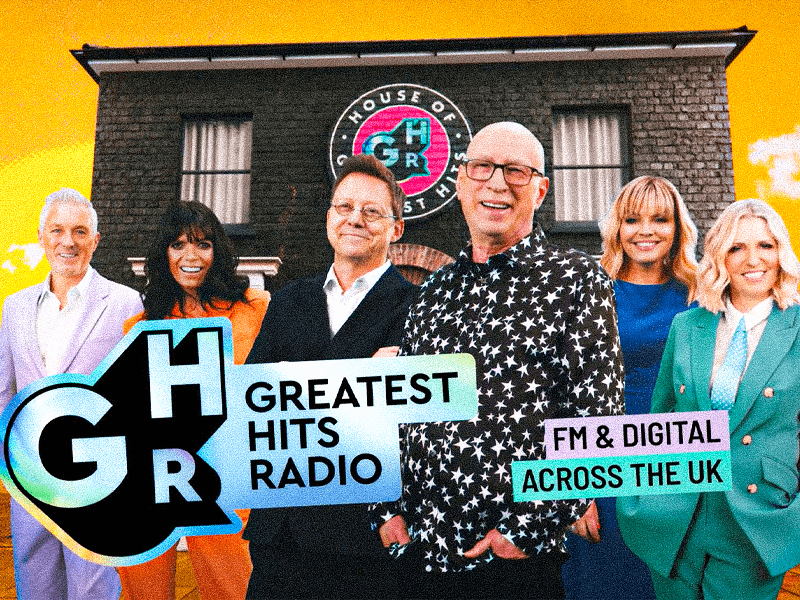
One of the biggest draws of Greatest Hits Radio is its line-up of well-known DJs who bring both credibility and familiarity:
- Ken Bruce – Former BBC Radio 2 icon, now hosting mid-mornings with PopMaster.
- Simon Mayo – Hosts Drivetime with his trademark wit and music knowledge.
- Mark Goodier – Known for presenting Greatest Hits of the 80s and classic chart rundowns.
- Jackie Brambles – Former TV and radio host, now adding depth to the station’s prime slots.
- Paul Gambaccini – “The Professor of Pop” offers expert insights into classic hits.
This presenter strategy positions GHR as the natural home for listeners who grew up with these voices on BBC or commercial radio.
Audience Growth and Reach
According to RAJAR data (2024):
- Weekly audience: Over 7.5 million listeners.
- Growth rate: One of the fastest-growing stations in the UK, thanks in part to Ken Bruce’s arrival.
- Demographic: Primarily 35–64 year-olds, but also attracts younger listeners who enjoy retro hits.
This success has directly challenged BBC Radio 2, which has seen audience losses since Bruce’s departure.
Music and Programming Style
The GHR playlist is simple yet powerful:
- Core decades: 70s, 80s, 90s.
- Artists: Fleetwood Mac, Queen, Madonna, George Michael, Whitney Houston, U2, ABBA.
- Specialty shows: Decade-themed hours, chart countdowns, and presenter-curated specials.
- Spin-off stations: Greatest Hits Radio 70s, 80s, 90s (digital only).
Unlike purely automated stations, GHR emphasizes presenter-led storytelling, which keeps listeners engaged beyond the music.
National Network vs Local Flavour
Greatest Hits Radio broadcasts national content with local opt-outs for news, traffic, and advertising. This ensures both broad consistency and regional relevance, which helps retain loyal local audiences while appealing to a national base.
Expansion and Rebranding Moves
Bauer Media has aggressively grown GHR by:
- Converting existing local brands into the GHR format.
- Expanding digital radio presence (DAB).
- Shutting down many medium wave (AM) frequencies to cut costs.
- Launching decade spin-offs to compete with streaming playlists.
These moves show Bauer’s intention to make GHR a true national powerhouse.
Competition and Challenges
- BBC Radio 2: The main rival, but losing listeners to GHR since Ken Bruce’s defection.
- Streaming services: Spotify/Apple Music compete for music-only listening, but lack presenter personality.
- Digital disruption: Need to keep younger audiences engaged as listening shifts online.
Despite these challenges, GHR’s blend of nostalgia and famous presenters gives it a unique edge.
Listener Experience
Listeners can tune in via:
- FM and AM frequencies (in some regions).
- DAB digital radio (nationwide).
- Online streaming via Radioplayer, Planet Radio app, or smart speakers.
- Podcasts and catch-up content, including PopMaster.
Engagement also comes via phone-ins, competitions, and social media interaction.
FAQs About Greatest Hits Radio
1. What is Greatest Hits Radio?
A UK radio network playing hits from the 70s, 80s, and 90s, hosted by famous DJs like Ken Bruce and Simon Mayo.
2. Who owns Greatest Hits Radio?
It is owned by Bauer Media Audio UK.
3. What frequency is Greatest Hits Radio on?
It varies by region but is widely available on FM, DAB, and online.
4. Who are the presenters?
Ken Bruce, Simon Mayo, Jackie Brambles, Paul Gambaccini, and more.
5. How popular is it?
It reaches over 7.5 million weekly listeners in the UK.
